.png)
What Is Money — And Why Does It Quietly Lose Value Over Time?
Before you invest, borrow, or plan — understand the single most important thing about the money in your pocket.
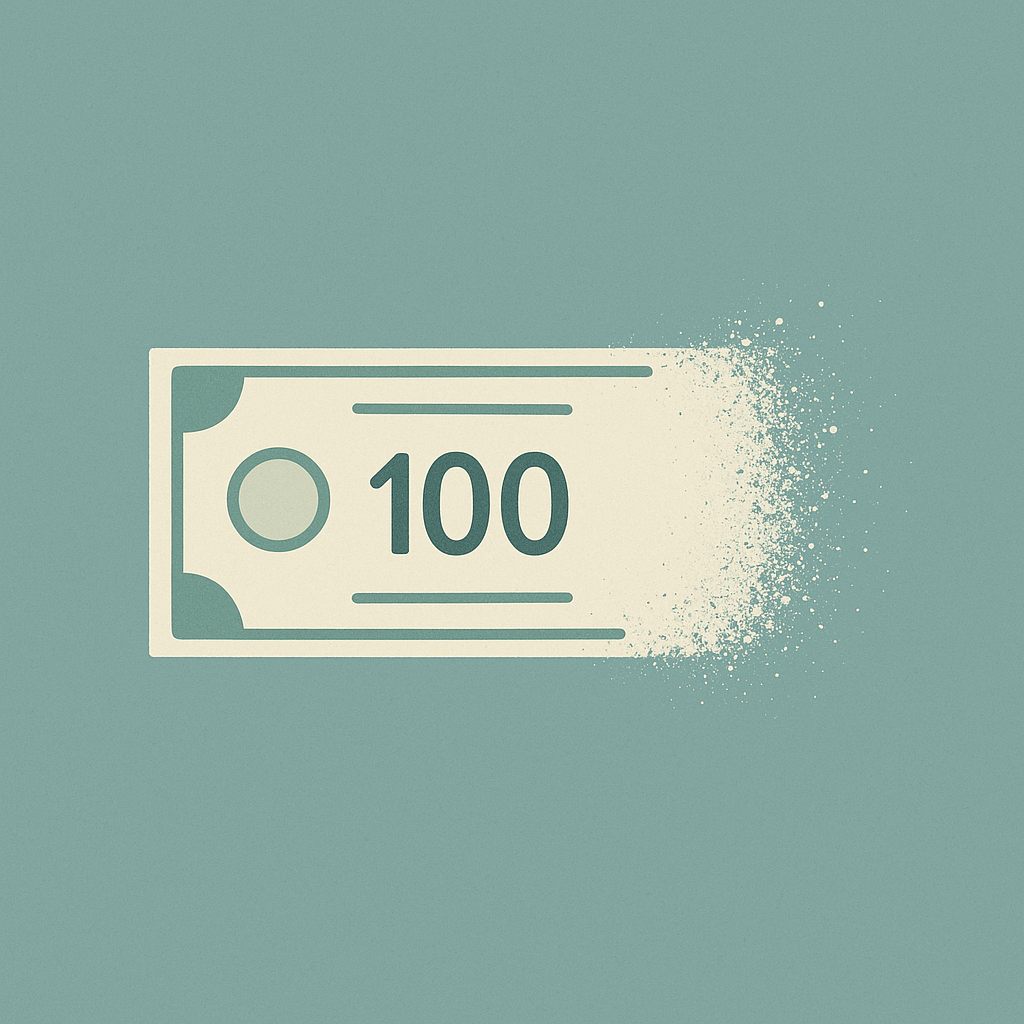
Here is a question that most people have never been asked in school, at home, or at work: what is money, really? Not philosophically — practically. What does it do? Why does it exist? And why does the ₹100 note in your wallet buy less today than it did five years ago?
Understanding money — what it is and how it behaves — is the foundation of every financial decision you will ever make. Without this, everything else is guesswork.
What money actually is — in one sentence
Money is a store of value and a medium of exchange. It lets you trade your time and effort (income) for goods and services — without having to barter directly. Instead of trading your work for rice and your neighbour's work for cloth, we all trade everything for money, and then exchange money for what we need.
Simple. But here is the catch: money's value is not fixed. It changes. And almost always, it goes in one direction: down.
What is inflation — and why does it matter to you personally?
Inflation is the gradual rise in prices over time. When inflation is 6%, something that cost ₹100 last year costs ₹106 this year. Your ₹100 note is the same piece of paper — but it buys less. Its purchasing power has fallen.
In 2004, a litre of petrol in India cost approximately ₹34. In 2024, it costs over ₹100. Your ₹34 in 2004 would have bought a full litre. The same ₹34 today buys barely a third. The money did not disappear. But its value did — quietly, gradually, year after year. This is inflation.
What does this mean for your savings?
If inflation runs at 6% per year and your savings account pays 3.5% per year, your money is growing at 3.5% but losing purchasing power at 6%. Your real return is negative. You are getting poorer — even while your bank balance grows. This is why simply saving money is not enough. Money that does not grow faster than inflation is money that is slowly shrinking.
| If you do nothing (savings account at 3.5%) | If you invest wisely (diversified at 10-12%) |
|---|---|
| ₹1 lakh today = ₹1.035 lakh next year | ₹1 lakh today = ₹1.10–1.12 lakh next year |
| Real return: -2.5% after 6% inflation | Real return: +4–6% after inflation |
| After 10 years: ₹1.41 lakh (nominal) | After 10 years: ₹2.59–3.10 lakh (nominal) |
| Purchasing power: declining | Purchasing power: growing |
The practical takeaway for everyday life
- Do not leave large amounts idle in a savings account for long periods.
- Understand that inflation is always working against your idle money — silently, every day.
- The goal of investing is not just to grow money — it is to grow it faster than inflation.
- Even small, regular investments — started early — beat inflation over time through compounding.
Money is not neutral. Idle money shrinks. Invested money grows. The moment you understand this — really understand it — every financial decision you make gets clearer. This is where every financial journey should begin.
Have a question about your finances?
FinAxis helps individuals and businesses across India with loans, working capital, wealth & insurance.
Talk to an expert