.png)
UPI Fraud in India — How It Works and How to Never Fall for It
India processes billions of UPI transactions monthly. Fraudsters have studied every weak point. Here is what they know — and what you must know.
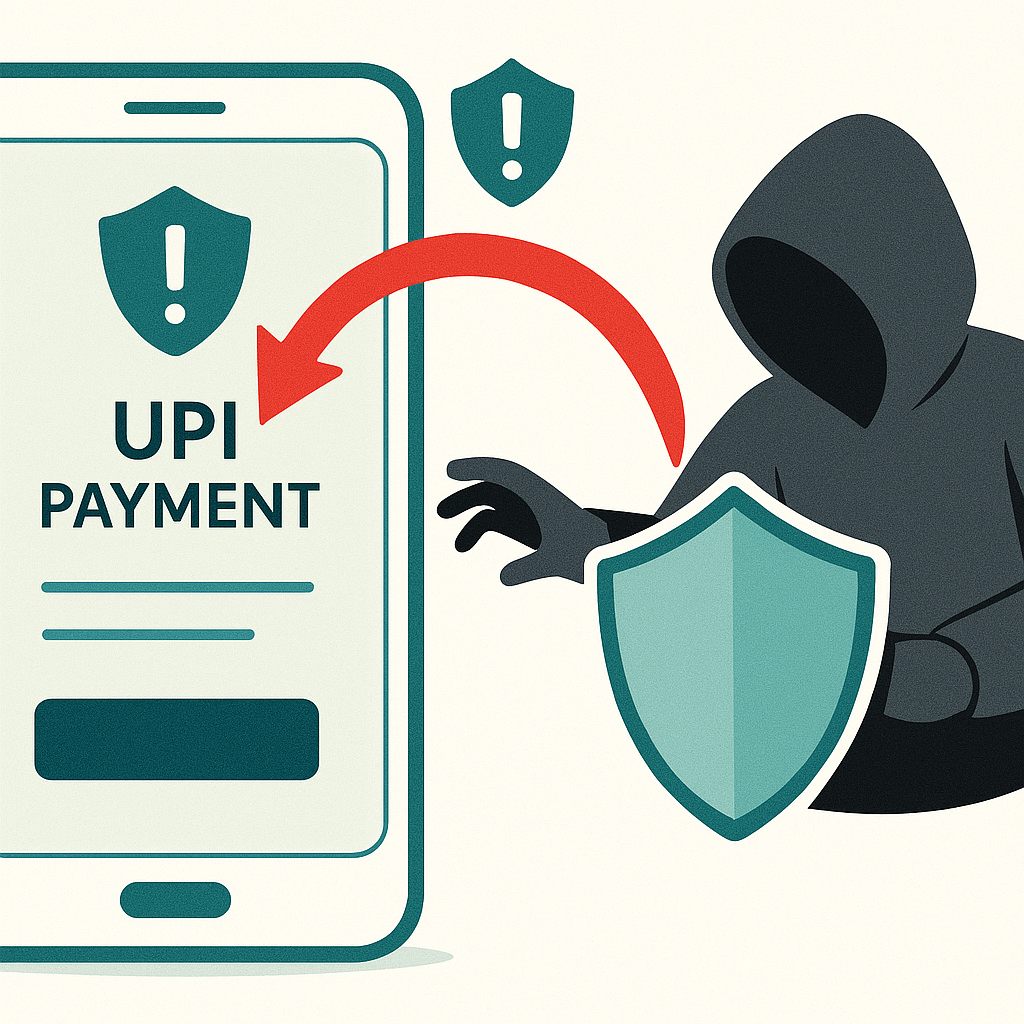
UPI (Unified Payments Interface) has transformed how India transacts. It has also created a fraud surface that criminals exploit with great sophistication. The majority of UPI frauds do not involve hacking. They involve social engineering — manipulating you into authorising a transaction yourself.
The five most common UPI fraud methods
The most important thing to understand about UPI: you NEVER need to enter your UPI PIN to receive money. Only to send it. The moment anyone — a buyer, a banker, a customer care executive — asks you to enter your PIN, scan a QR code, or click a link to 'receive' a payment, the transaction is fraudulent. No legitimate payment receipt requires your PIN. Ever.
Immediate steps if you have been defrauded via UPI
- Call your bank immediately — within minutes — to block the account and flag the transaction.
- File a complaint on cybercrime.gov.in — India's official cybercrime reporting portal.
- Call the National Cyber Crime Helpline: 1930.
- File a police complaint at your nearest cyber police station — get a written acknowledgement.
- Report the fraudulent UPI ID on the NPCI dispute portal (dispute.npci.org.in).
UPI fraud works because the victim authorises the transaction themselves. The defence is a single principle: your PIN is only for sending money. If anyone requests it for any other reason — fraud is in progress. Stop. Hang up. Verify through official channels only.
Have a question about your finances?
FinAxis helps individuals and businesses across India with loans, working capital, wealth & insurance.
Talk to an expert