.png)
Ponzi Schemes and Investment Frauds — The Red Flags That Should Make You Walk Away
Every generation of investors falls for some version of the same scam. Know the pattern — and never become a statistic.
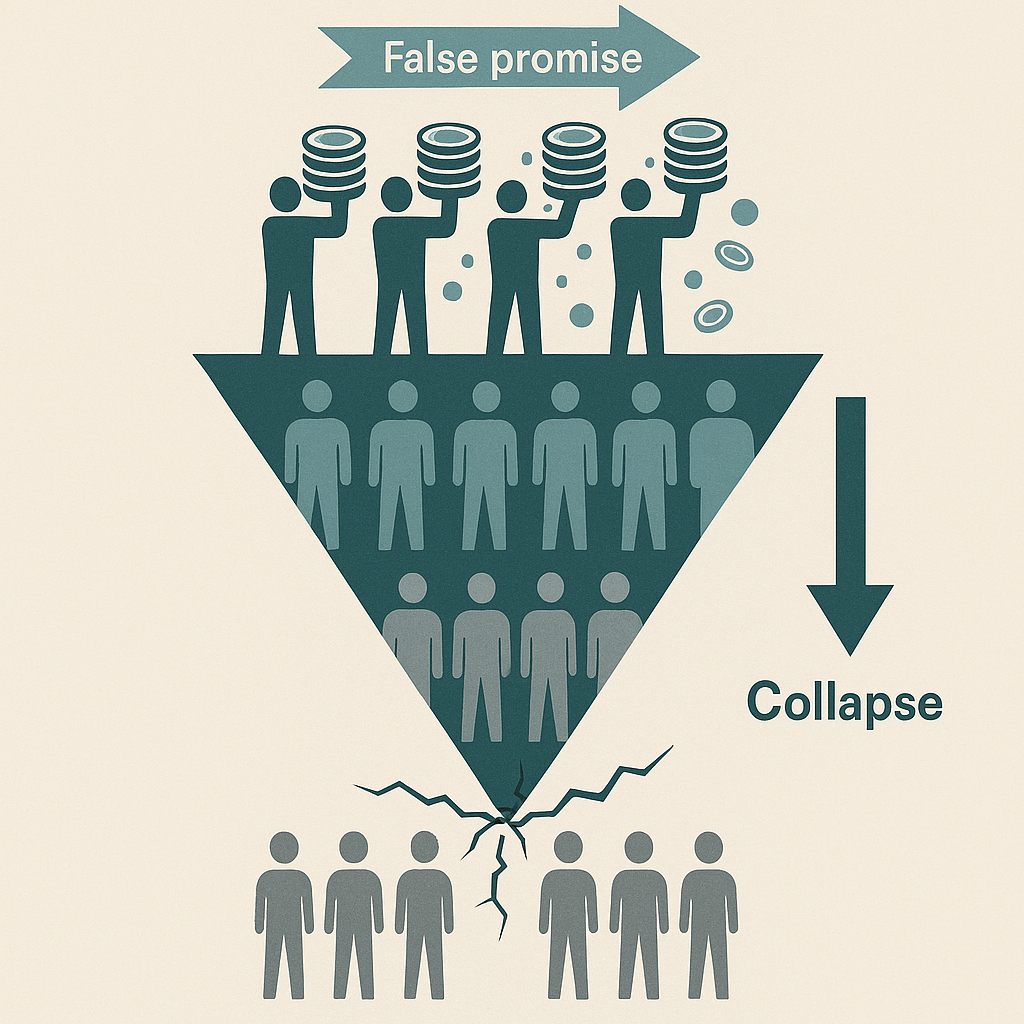
A Ponzi scheme is named after Charles Ponzi, who in 1920 convinced thousands of Americans to give him money with a promise of 50% returns in 45 days. He paid early investors — using later investors' money. When enough investors tried to withdraw simultaneously, the entire structure collapsed. He went to prison. His investors lost everything.
This exact structure — paying existing investors with new investor money, sustained only as long as new money keeps coming in — is replicated in India every year. The names change. The structure never does.
The consistent red flags — learn them by heart
In 2024, a cooperative society in Maharashtra promised 18% annual fixed returns to over 4,000 depositors. They paid returns regularly for 3 years — using new depositor money. When inflows slowed, payments stopped. Over ₹200 crore was lost. The victims were ordinary people — teachers, farmers, retired government employees. Many lost their entire life savings. Every one of the six red flags above was present from day one. The information was there. The pattern recognition was not.
If you are already invested in a suspicious scheme
The instinct is to wait and hope. This is the costliest instinct. If you recognise the red flags in something you are already in — withdraw what you can, as soon as you can. Getting back 60% today is better than getting back 0% in six months. And report the scheme to SEBI (scores.sebi.gov.in) and the local police immediately.
There are no guaranteed high-return investments. This is not pessimism — it is mathematics. Return and risk are inseparable. Whenever someone promises to separate them for your benefit — they are lying. The promised return is the bait. Your money is the catch.
Have a question about your finances?
FinAxis helps individuals and businesses across India with loans, working capital, wealth & insurance.
Talk to an expert