.png)
How to Read Your Salary Slip — and What Every Deduction Actually Means
You earn it. It gets deposited. But what happens in between? Most salaried Indians have never properly read their own salary slip.
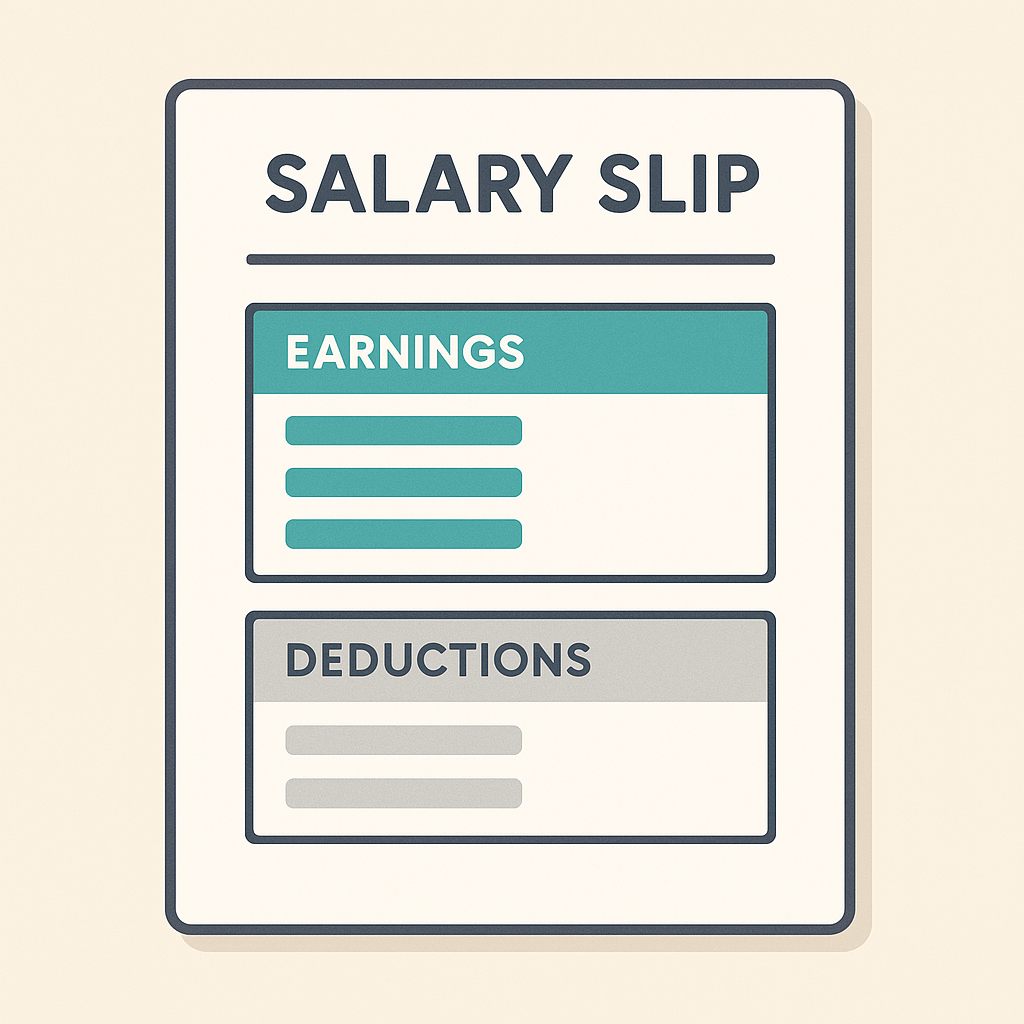
A salary slip is a document most people glance at once to confirm the credited amount — then ignore. But it contains crucial information: what your employer is contributing on your behalf, how much tax is being deducted, whether your PF is being calculated correctly, and whether your take-home matches what you were promised.
Reading it properly takes five minutes. And it often reveals discrepancies, missed entitlements, or tax savings opportunities that go unnoticed for years.
The two sides of a salary slip: Earnings and Deductions
| EARNINGS (what you are paid) | DEDUCTIONS (what is withheld) |
|---|---|
| Basic Salary — typically 40–50% of CTC | EPF (Employee) — 12% of basic salary |
| House Rent Allowance (HRA) — if applicable | Professional Tax — state-specific, typically ₹200/month |
| Special Allowance — flexible component | TDS (Tax Deducted at Source) — based on your income slab |
| LTA (Leave Travel Allowance) | Health Insurance Premium — if employer deducts it |
| Medical Allowance | Employee State Insurance (ESI) — if salary < ₹21,000/month |
The most important things to check every month
- Is your Basic Salary correct? All PF contributions and gratuity calculations depend on it. If basic is understated, your PF corpus and future gratuity will be lower.
- Is EPF being deducted at 12% of basic? And is your employer's 12% also showing (though it may be in the CTC statement, not the slip).
- Is TDS reasonable? If you have investments under 80C, 80D, or HRA exemption — have you submitted the investment declarations to HR? Undeclared investments lead to excess TDS and you have to claim the refund later.
- Is HRA shown separately? If you pay rent, HRA exemption can save significant tax. But it only applies if HRA is a separate component — not if it is merged into a special allowance.
Thousands of salaried Indians pay excess TDS every year because they never submitted their rent receipts, insurance premium certificates, or 80C investment proofs to their employer's HR department. The government refunds this eventually — but it is your money sitting interest-free with the government for up to 12 months. Submit your declarations in April. Do not wait for March.
CTC vs. Gross Salary vs. Net Salary — the three numbers that confuse everyone
CTC (Cost to Company) is everything your employer spends on you — including PF, gratuity, and benefits. Gross Salary is your salary before deductions. Net Salary (take-home) is what actually reaches your bank. CTC to take-home is typically a 20–30% difference for most salaried employees. Always clarify which number is being discussed in a job offer.
Your salary slip is a financial document — not just a payment confirmation. Read it every month. Verify the components. Submit your tax-saving proofs on time. And if something looks wrong, ask HR immediately. Nobody advocates for your salary accuracy except you.
CATEGORY 01 Business Loans & Funding Basics What every business owner needs to know before walking into a lender's office.
Have a question about your finances?
FinAxis helps individuals and businesses across India with loans, working capital, wealth & insurance.
Talk to an expert