.png)
How to Make a Budget That Actually Works — Without Giving Up Everything You Enjoy
Budgeting has a reputation for being restrictive and joyless. It does not have to be. Here is a framework that works in real life.
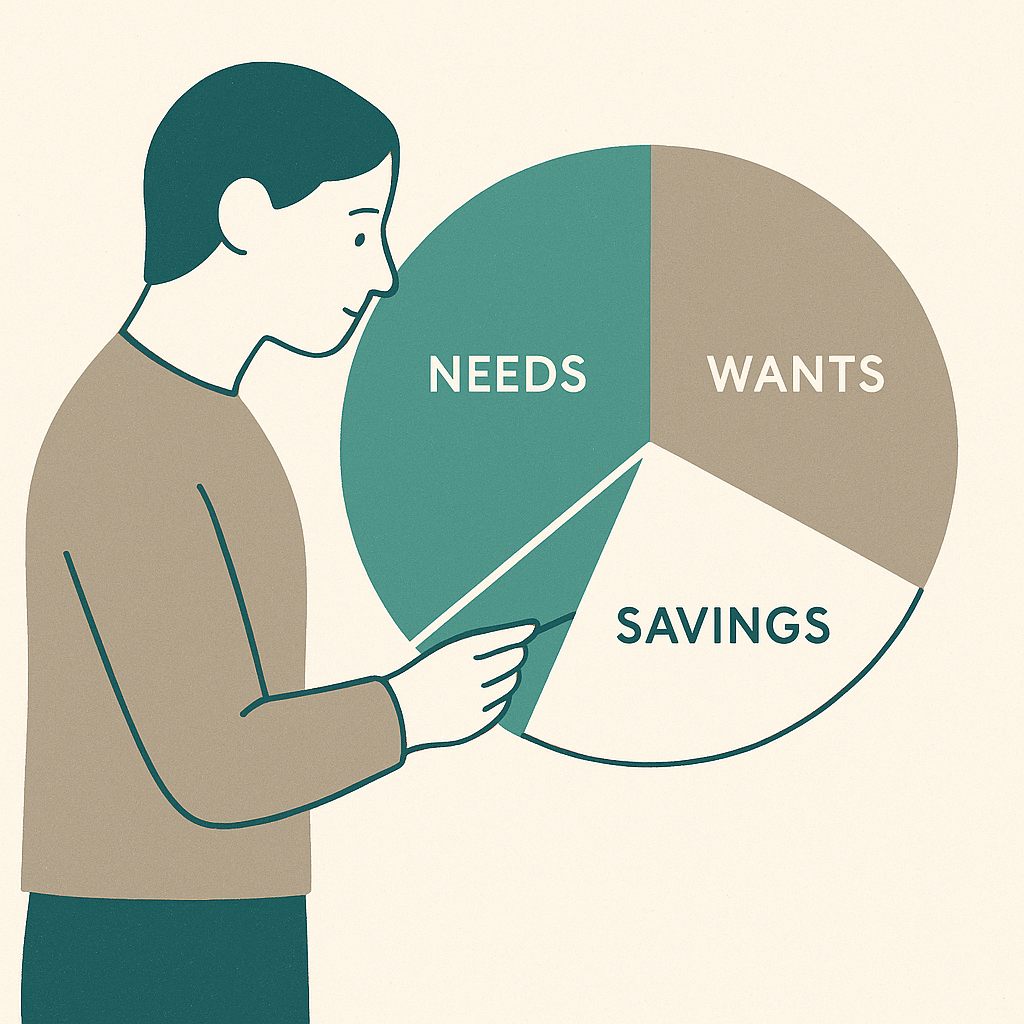
Most people who try budgeting fail within three months. Not because they lack discipline. But because their budget is built around restriction — it tells them what they cannot do — rather than around priorities — what actually matters to them.
A budget that works is not a punishment. It is a plan. It answers one question clearly: where does my money go — and is that where I actually want it to go?
The 50 / 30 / 20 rule — the simplest framework that works
This rule, popularised by financial thinkers and adapted for Indian households, divides your take-home income into three buckets:
| Bucket | What Goes Here |
|---|---|
| 50% — Needs | Rent or home loan EMI, groceries, utilities, transport, school fees, insurance premiums. Things you cannot opt out of. |
| 30% — Wants | Dining out, entertainment, travel, shopping, subscriptions. Things that improve your life but are not strictly necessary. |
| 20% — Savings & Investments | SIPs, retirement contributions, emergency fund, loan prepayments. Money that works for your future. |
Most middle-class Indian households spend 60–70% on needs — often because their home loan EMI alone eats 35–40% of income. If your needs exceed 50%, do not panic — adjust the framework to your reality. The key insight is not the exact percentages. It is this: savings must be a fixed allocation, not whatever is left over at the end of the month. Because what is left over at the end of the month is almost always zero.
The one rule that changes everything
Pay yourself first. On the day your salary arrives, transfer your savings amount — whatever you have committed to — before you spend on anything else. Treat your SIP, your RD, your PPF contribution, like an EMI that cannot be missed.
The psychological shift this creates is profound. You stop living on your full income and start living on what remains after saving. Within a few months, you adjust. The lifestyle adapts. The savings accumulate.
Practical steps to build your budget this week
The best budget is the one you actually follow — even imperfectly. Start with awareness. Add automation. Review once a month. Adjust when life changes. The goal is not perfection. The goal is direction.
Have a question about your finances?
FinAxis helps individuals and businesses across India with loans, working capital, wealth & insurance.
Talk to an expert