.png)
How to Build and Improve Your Business Credit Score
Your business has a credit score too. Most owners do not know it exists — and fewer know how to improve it.
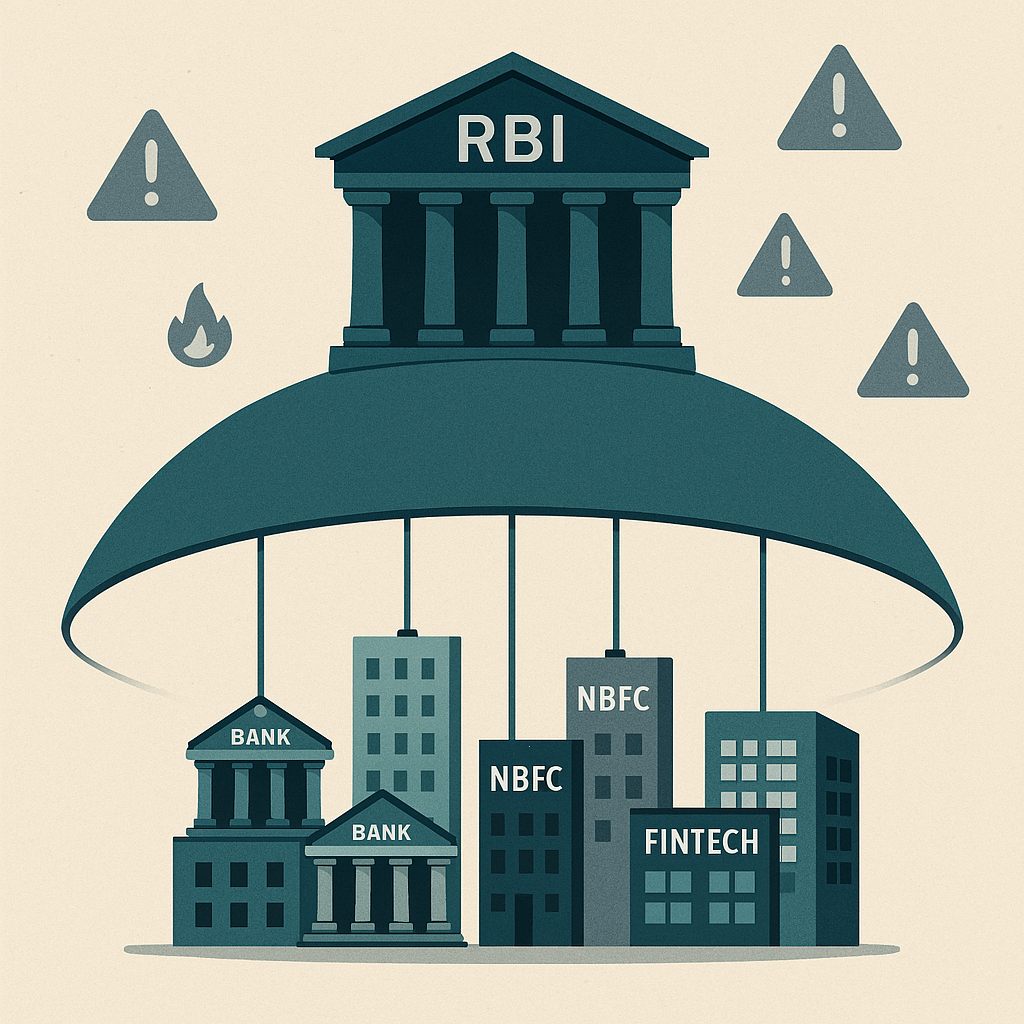
Just as individuals have a personal CIBIL score, businesses have a credit profile tracked by credit bureaus like CIBIL MSME Rank, Equifax, and CRIF High Mark. Lenders check this profile — in addition to or instead of your personal CIBIL — when evaluating a business loan application.
A strong business credit profile opens access to larger loans, better rates, and faster approvals. A weak one — or no profile at all — limits your options significantly.
What makes up a business credit profile?
- Repayment history on existing business loans and credit facilities.
- Utilisation of working capital limits — consistently maxing out your CC limit is a negative signal.
- Number and recency of credit enquiries — multiple simultaneous loan applications suggest financial stress.
- Age and stability of banking relationships — older, consistent relationships with the same bank carry positive weight.
- Outstanding liabilities and Debt-Service Coverage Ratio (DSCR) — the ratio of operating income to debt obligations.
Practical steps to build business credit
A business with three years of clean CC repayment history, timely GST filings, and consistent banking is infinitely more bankable than a business with twice the turnover and no credit track record. Lenders cannot assess risk without history. Creating that history — deliberately and early — is one of the highest-leverage financial investments a business owner can make.
Business credit does not build itself. It requires intentional behaviour over time — clean repayments, consistent filings, disciplined banking. Start now, even with small facilities. The credit profile you build today determines the capital you can access in three years.
Have a question about your finances?
FinAxis helps individuals and businesses across India with loans, working capital, wealth & insurance.
Talk to an expert